
.avif)
Find & Read
No items found.
.svg)
Bio
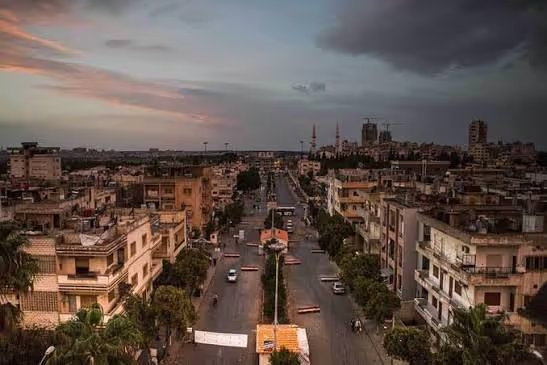
Homs is Syria's third largest city after Aleppo and Damascus, and the seat of a governorate that sits at the centre of the country, where the routes linking the coast to the interior and the north to the south meet. UN-Habitat's city profile (2014, draft) puts the pre-crisis population at approximately 800,000 across 36 neighbourhoods, and describes the city as occupying a central position in the national transport network that connects the major urban centres.
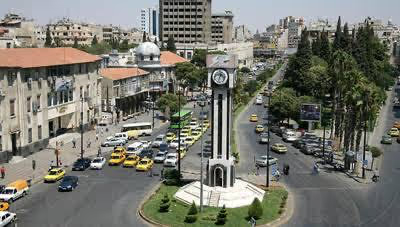
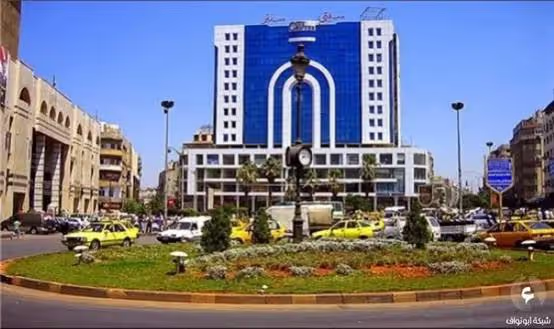
The Old City and its markets formed the commercial and professional heart of the governorate: UN-Habitat (2014) records that more than 70 per cent of the specialised professionals and business class of Homs — retailers, souk owners, engineers, doctors, pharmacists and private health professionals — worked in the Old City and its markets. The Old City neighbourhoods together with three adjacent areas held a population of 156,000 at the 2004 census of the Central Bureau of Statistics. Landmarks include the Khalid ibn al-Walid Mosque, the Grand (al-Nouri) Mosque, the citadel and the old Clock Square, alongside the Hasawiya industrial zone and the intra-city farming belt known as Al Basateen, which UN-Habitat (2014) records as having provided almost 40 per cent of the city's fresh food products and a source of income for more than 12,000 families.
Damages
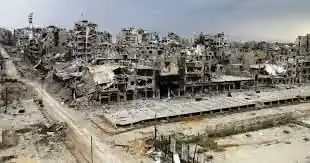
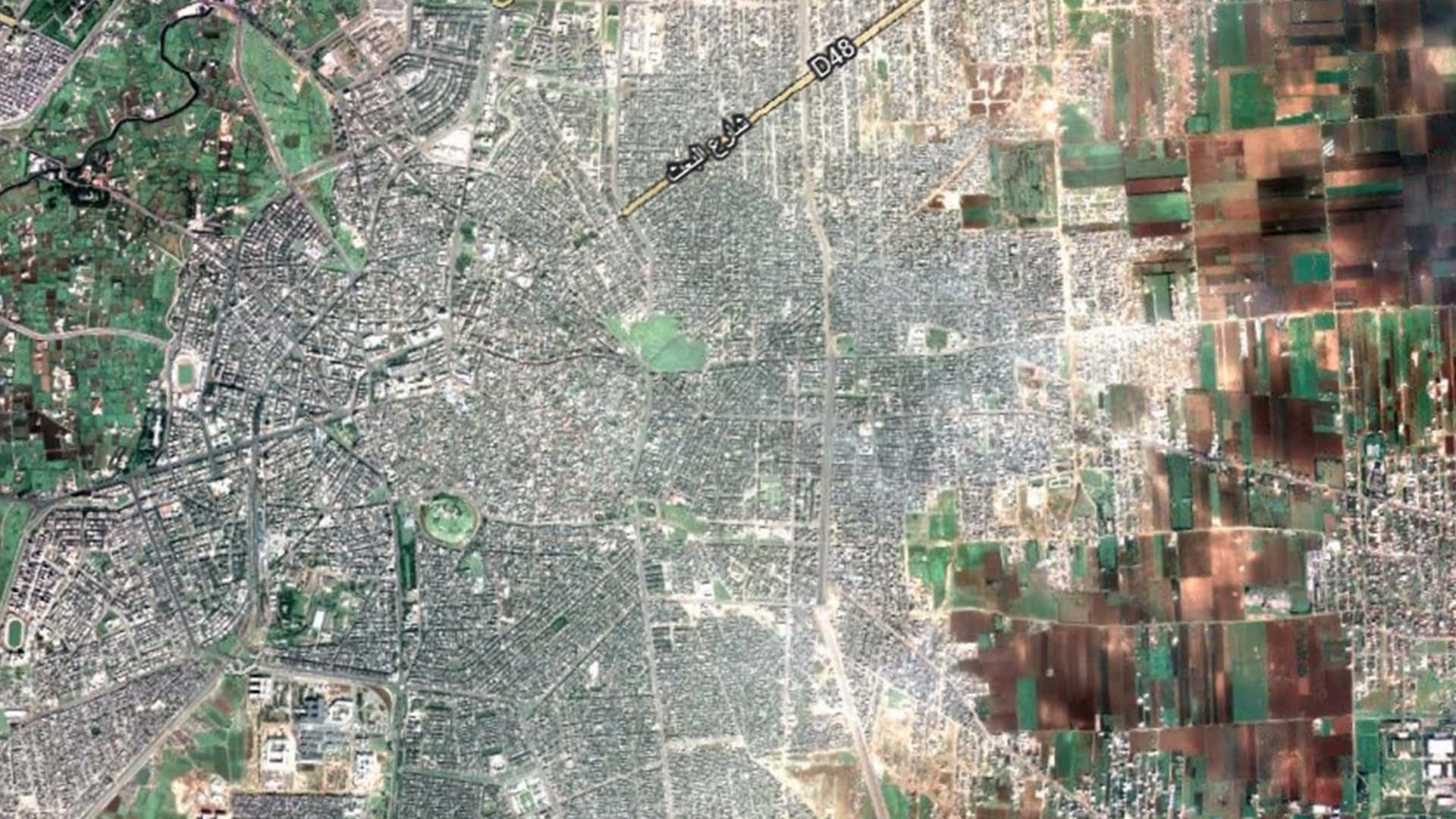
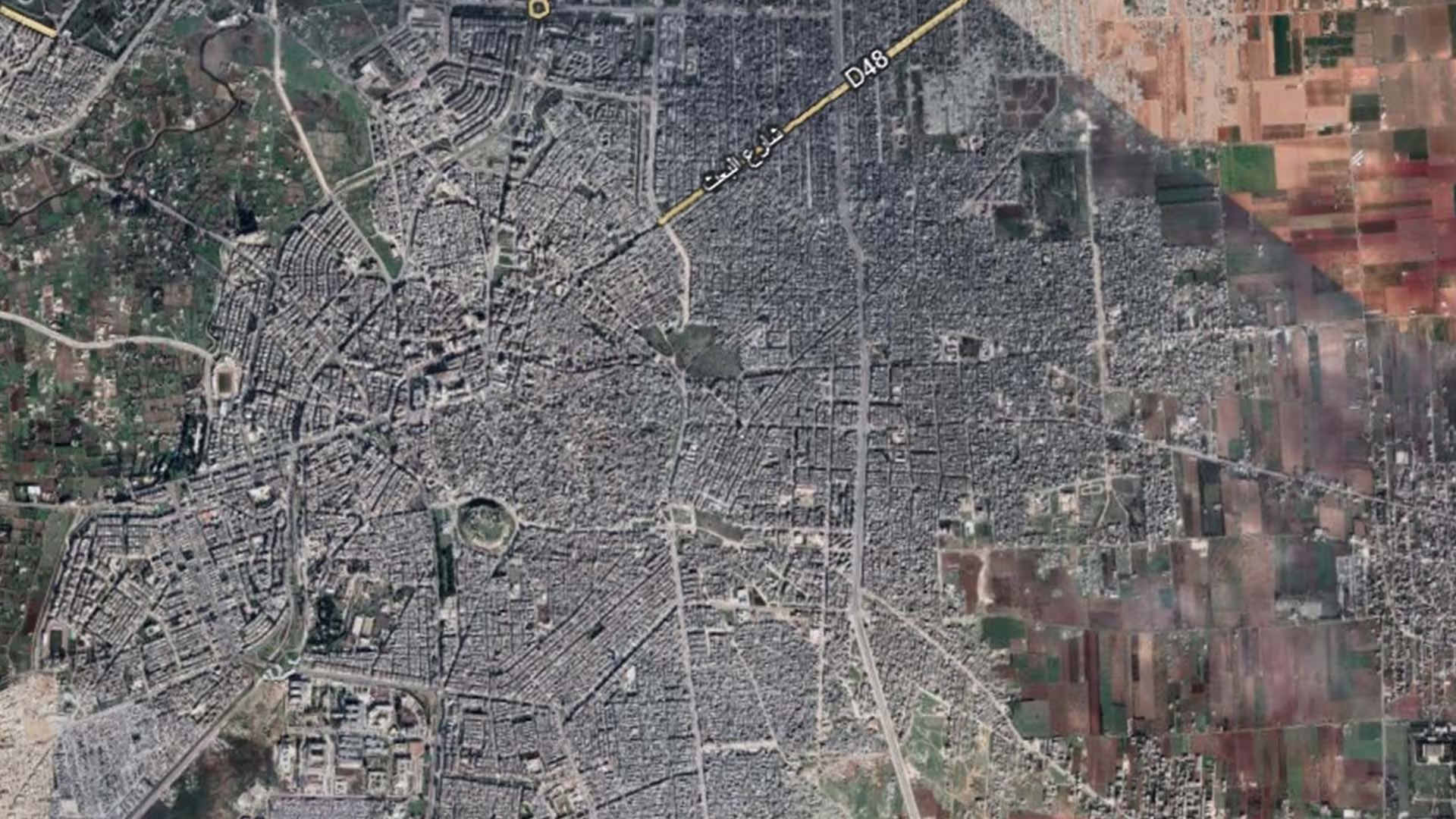
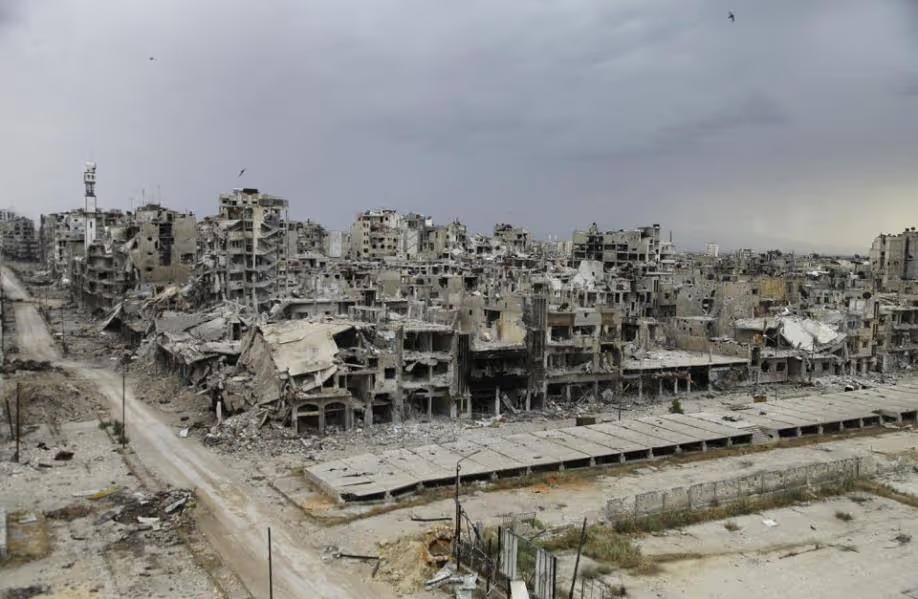
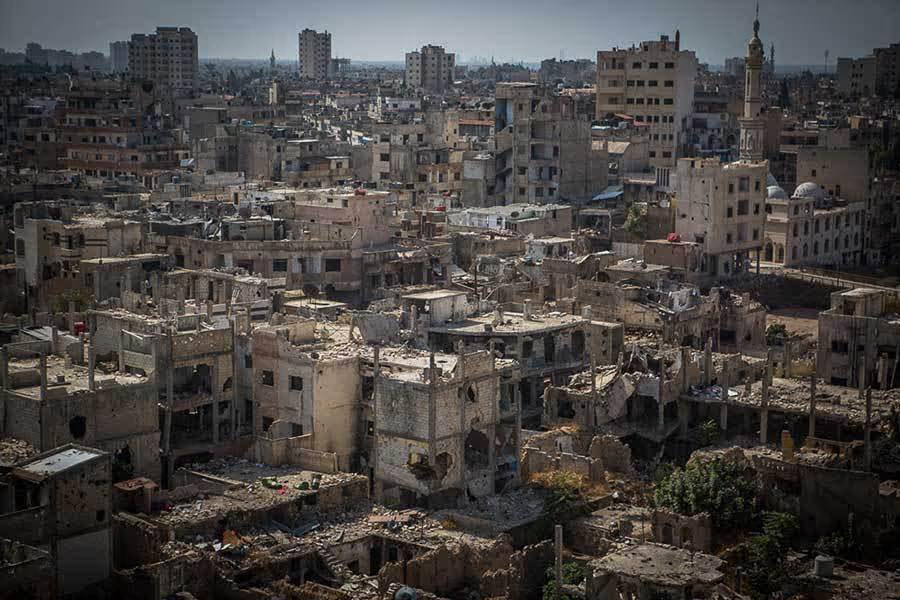
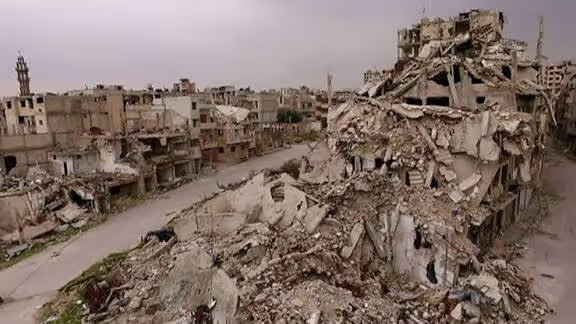
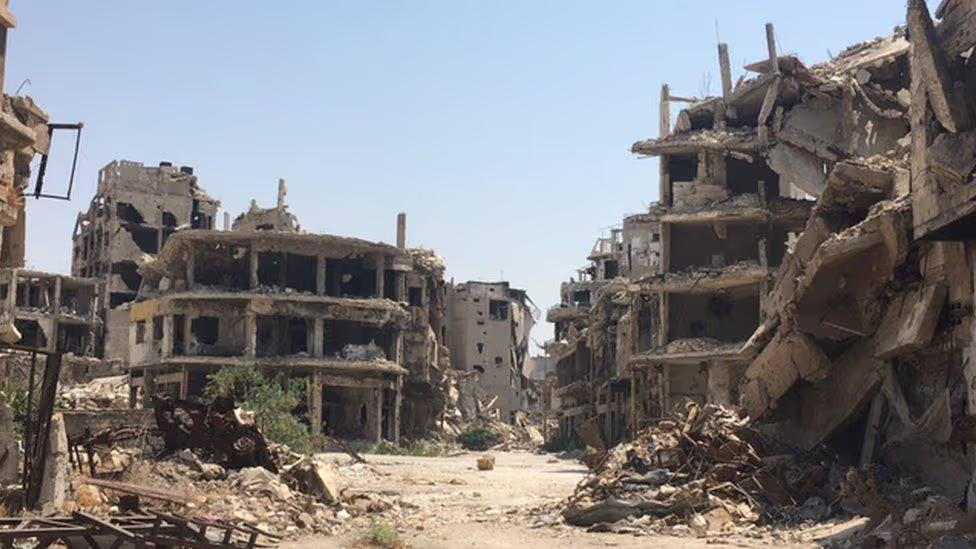
The most detailed institutional assessment of the city remains UN-Habitat's city profile of 2014, issued as a draft for revision. It records that 96,700 housing units, including apartment blocks, were no longer in use or had been abandoned by the end of 2013 — equal to 54.3 per cent of the city's 2011 housing stock. A shelter damage assessment by UNOSAT, based on WorldView satellite imagery acquired in September 2013 and cited in the same profile, concluded that 6,876 buildings were heavily damaged, that is destroyed or severely damaged. The profile also cites United Nations estimates that 468,000 inhabitants had been displaced by December 2013.
The effect on the urban fabric extended to services. UN-Habitat (2014) records that 26 of the city's 36 neighbourhoods were either totally or partially non-functional, that 61 per cent of educational facilities were no longer operational, and that 62 per cent of health care institutions were out of service. In the Old City and its adjacent neighbourhoods, UN-Habitat's neighbourhood profile (2014) estimates that of a total 151,000 residential and commercial units, 37,700 were heavily damaged or totally destroyed and a further 66,500 partially damaged; of those 151,000 properties, 130,000 were officially recognised in the cadastral record.
Recovery work is documented and under way. Through the REVIVE project, UNDP and its partners are clearing 570,000 tonnes of debris across Aleppo, Deir ez-Zor, Homs and Rural Damascus while rehabilitating roads and water and sewage networks, providing explosive ordnance risk education and supporting debris recycling; more than 1,300 people have so far taken part in linked cash-for-work activities, helping support over 6,000 family members (UN News, August 2026). Separately, the Government of Japan is contributing USD 806,666 to a 12-month UN-Habitat project, "Strengthening Municipal Operational Readiness for Urban Recovery in Syria", covering approximately 20 municipal administrative units across seven governorates including Homs, with an estimated 870,000 beneficiaries and between 120 and 180 municipal staff to be trained in geographic information systems, urban data management, recovery planning and housing, land and property matters (United Nations in Syria, May 2026).
.svg)

.png)