.avif)

Rehabilitation of Qulaydin Water Station
.svg)



.avif)
.svg)
The General Company for Drinking Water and Sanitation in Hama has rehabilitated the Qulaydin spring and water station in the Ghab Plain, in the north-western countryside of Hama Governorate, in cooperation with Islamic Relief. According to the Syrian Arab News Agency (SANA), the company put the station into trial service on 22 June 2026 after completing the rehabilitation works. The station supplies drinking water to more than 30,000 people in more than ten villages and residential communities in the Ghab area.
Project Timeline
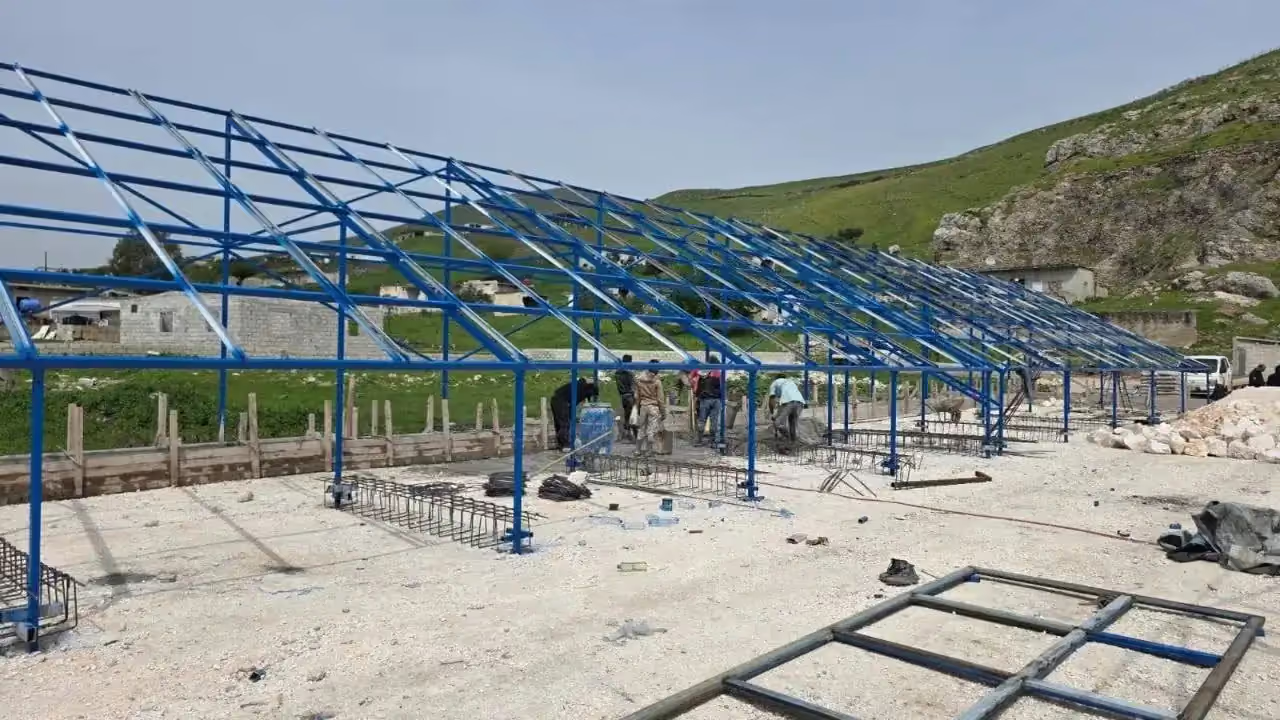
- 13 April 2026: the start of a project to equip the Qulaydin station with a 255-panel solar power system in cooperation with Islamic Relief was announced, alongside construction works on the pumping and control rooms, according to Al-Ikhbariah.
- 7 June 2026: the head of the Suqaylabiyah water unit told Enab Baladi that progress had exceeded 95 per cent and that the concrete works were complete. She said pumping to the collector reservoir on the mountain was expected to start on 15 June, followed by flushing the distribution network and inspecting it for faults before regular pumping to residents.
- 22 June 2026: the station entered trial service after its rehabilitation was completed, according to SANA.
- 23 June 2026: the company announced the rehabilitation and operation of the station, and the Ministry of Energy said it provides safe water to more than 30,000 people in the Ghab area, according to Al-Ikhbariah.
Scope of Works
According to SANA, the works included rebuilding the station and fitting it with modern mechanical and electrical equipment. The scope announced for the project also covered rehabilitating the station building and its perimeter wall and building a guard room, and Al-Ikhbariah reported construction works on the pumping and control rooms.
The main ground reservoir, with a capacity of 500 cubic metres, was rehabilitated by recasting its walls, cleaning it, applying a waterproofing layer and fitting a new door, according to the head of the Suqaylabiyah water unit. She said the works also included installing two new horizontal pumps, each with a capacity of 75 cubic metres per hour at a lifting head of 120 metres.
Before the rehabilitation, the station was out of service: its walls and roof and the surrounding perimeter wall had collapsed, the guard room had been demolished, and its operating equipment, including the pumps, the generator set, the operating and shut-off valves and the chlorination units, had been lost, according to SANA and Enab Baladi.
Solar Energy System
The station runs on a solar energy system of 255 panels rated 585 watts each, according to SANA and Al-Ikhbariah. SANA quoted the director of the Ghab District as saying the system is meant to keep the station operating during electricity rationing, while Al-Ikhbariah reported that it keeps the station running during daylight hours. The authorities cited by Al-Ikhbariah said solar power reduces dependence on conventional fuel, lowers operating costs and keeps water pumping continuous.
According to the head of the Suqaylabiyah water unit, the system's output covers the two pumps as well as the lighting, monitoring and chlorination equipment with a safety margin, and the project supplied a five-metre brush and a panel washer of at least 90 bar to clean the panels.
Beneficiaries and Service Area
The station supplies drinking water to more than 30,000 people in more than ten villages and residential communities in the Ghab area, according to SANA and the Ministry of Energy. Water is pumped from the station to a collector reservoir on the mountain and then flows by gravity to villages including Qulaydin, Al-Ziqqum, Al-Ankawi, Tell Wasit, Al-Qahira, Al-Mansoura, Al-Ziyara, Al-Mushayk and Khirbet al-Naqous, as well as a number of farms, according to the head of the Suqaylabiyah water unit.
She added that the station's output covers part of residents' needs rather than all of them, because large communities, some of them more than 20 kilometres away, need supporting sources and new wells.
Frequently Asked Questions
Who carried out the Qulaydin station rehabilitation?
The General Company for Drinking Water and Sanitation in Hama, in cooperation with Islamic Relief and in coordination with the Ghab District Administration. According to the head of the Suqaylabiyah water unit, Islamic Relief funded the project in full.
What did the project include?
Rebuilding the station with modern mechanical and electrical equipment, rehabilitating the 500-cubic-metre ground reservoir, installing two new horizontal pumps, and a solar energy system of 255 panels rated 585 watts each.
Has the station entered service?
The station entered trial service on 22 June 2026 after the rehabilitation works were completed, according to SANA. On 23 June 2026 the General Company announced the station's rehabilitation and operation, according to Al-Ikhbariah.
How many people benefit?
More than 30,000 people in more than ten villages and residential communities in the Ghab area.
What is the solar energy system for?
According to SANA, it keeps the station operating during electricity rationing; according to Al-Ikhbariah, it keeps the station running during daylight hours, lowers operating costs and reduces dependence on conventional fuel.
Update — 2026-06-22
According to the Syrian Arab News Agency (SANA) on 22 June 2026, the General Company for Drinking Water and Sanitation in Hama, working with Islamic Relief, brought the Qulaydin spring and water station in the Ghab area into trial service after completing rehabilitation works.
SANA reported that the works covered rebuilding the station and fitting it with modern mechanical and electrical equipment, alongside a solar power system of 255 panels rated 585 watts each to keep the station running through electricity rationing hours. The agency put the beneficiaries at more than 30,000 people across more than ten villages and residential communities in the Ghab area. The station's pumps, generator set, operating and shut-off valves and chlorination units had all been lost before rehabilitation.
Sources